The Question We All Ask in the Grocery Aisle
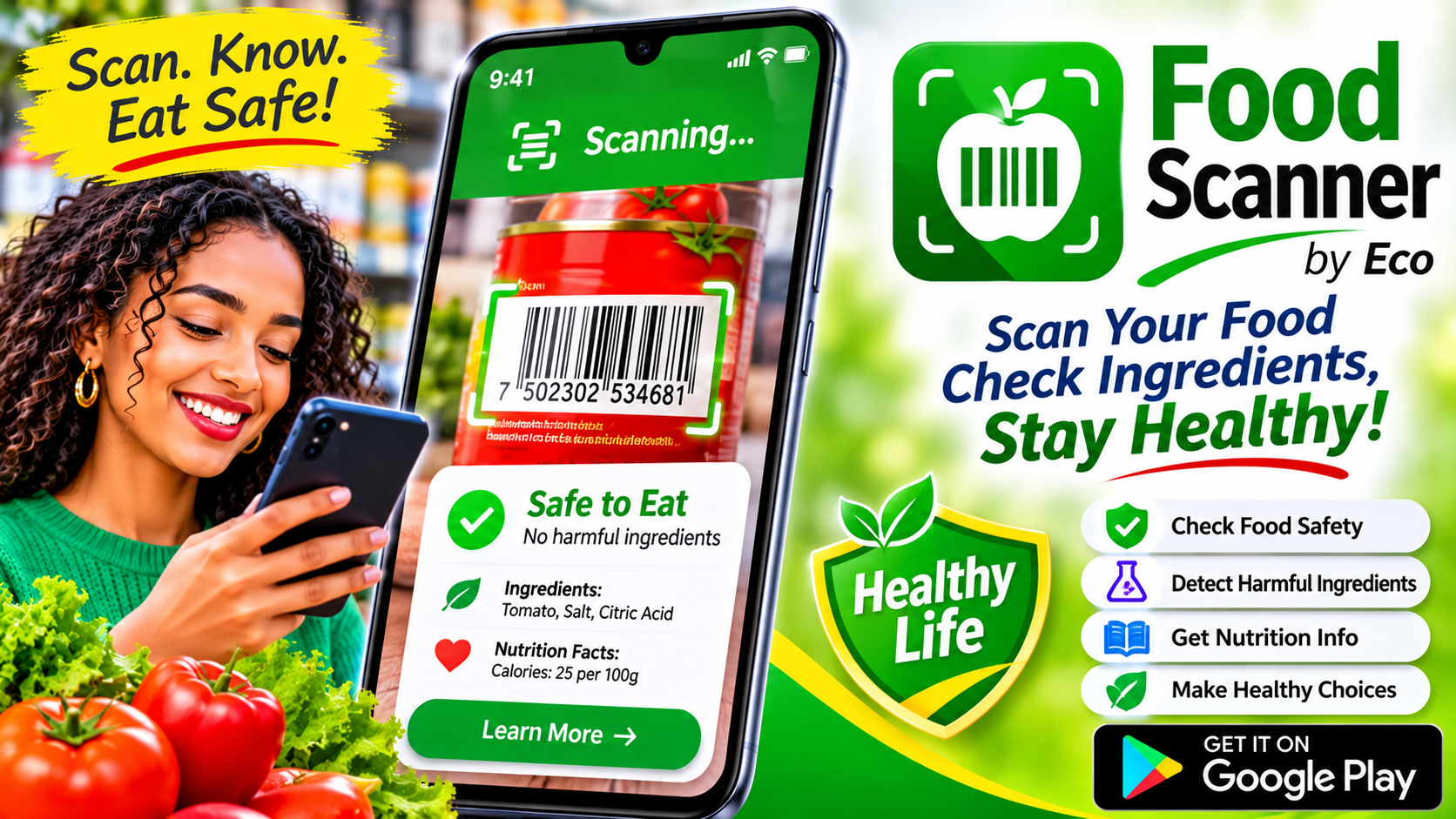
Picture this: you're standing in the supermarket, holding two boxes of granola bars, trying to figure out which one is actually healthier. One says "whole grain," the other says "no added sugar," and both have ingredient lists that read like chemistry homework. That moment of quiet confusion is exactly what Eatzy is built for. The app bills itself as an AI food scanner that gives you a clear food score in seconds—whether you're scanning a barcode on packaged snacks or pointing your camera at a meal on your plate. It's a compelling pitch, especially for anyone juggling dietary restrictions, food allergies, or just a genuine desire to eat better without hiring a nutritionist. But as with any app that promises to simplify complex information, the real story is in the details.
How It Works: Three Ways to Scan
The core workflow is refreshingly simple, and the app lays it out in three steps: open the scanner, point your camera at a barcode, label, or meal, and get your results. What's smart here is the flexibility in how you scan:
- Barcode scanner — for packaged foods and drinks, giving you ingredients and nutrition info in seconds
- Ingredient scanner — for products without a barcode, using your camera to read ingredient lists off any label
- Plate scanner — for actual meals, so you can evaluate what you're about to eat rather than just what you're buying
That three-way approach covers the full shopping-and-eating journey, from shelf to plate. The ingredient scanner is particularly clever—plenty of products, especially fresh or locally packaged items, don't have scannable barcodes, so camera-based text reading fills a genuine gap. It's the kind of feature that suggests the developers actually thought about real-world shopping scenarios rather than just building a barcode reader and calling it a day.
The Feature Set: More Than Just a Score
Dig into the app's capabilities and you'll find a fairly comprehensive toolkit for the health-conscious shopper. The food score is the headline—each scan tells you whether something is a healthy choice, fine in moderation, or worth limiting—but the surrounding features are what give that score context:
- Ingredient checker flags preservatives, sweeteners, colors, and other additives
- Allergen scanner highlights gluten, dairy, soy, nuts, eggs, and sulfites
- Dietary checks for vegan, vegetarian, gluten-free, and dairy-free needs
- Hidden sugar and sodium detection for those sneaky ingredients that don't jump out at you
- Side-by-side comparison so you can weigh two products on the shelf before buying
There's also a "quick health check" angle—the app explicitly asks questions like "is your juice actually healthy?" and "is this suitable for breakfast?" That framing is smart because it meets people where they actually are. Most of us aren't reading nutrition labels analytically; we're asking practical questions in the moment, and the app is designed to answer those rather than lecture you about macros.
Who It's Actually For
One of Eatzy's strengths is that it knows its audience—and it's a broader audience than you might expect. The app explicitly targets shoppers chasing cleaner, healthier food, people with food allergies or intolerances, vegans and vegetarians, gluten-free and dairy-free eaters, and parents choosing food for their families. That last group deserves special mention. For a parent scanning labels on behalf of a child with a nut allergy, an allergen scanner isn't a novelty—it's a genuine safety aid. The ability to set your allergen list once and get alerts on every scan is a small feature with outsized real-world value. Similarly, for someone newly diagnosed with celiac disease or a dairy intolerance, having a tool that reads long, complicated ingredient lists and highlights problem ingredients can meaningfully reduce the mental load of grocery shopping.
The Honest Caveats: New App, Small Review Base, Real Limitations
Now for the part a good review has to include. First, the review base is tiny—just 8 ratings at the time of writing. That's not a red flag in itself, but it does mean there's very little crowd-sourced signal about reliability, accuracy, or long-term performance. You're essentially an early adopter, and early adopters should calibrate accordingly. Second, the app's own disclaimer is refreshingly honest and worth repeating: Eatzy does not provide medical advice, information is for general reference only, product details can change, and you should always read the packaging label—especially if you have food allergies. That last point is critical. An AI scanner is a helpful second pair of eyes, not a replacement for the label itself. If you have a serious allergy, treat the app as a convenience, never as your sole verification.
The Data Privacy Question
As with any app that uses your camera and processes personal information, the data safety section deserves a careful read. The listing states that the app may collect personal information and may share photos and videos with third parties, while noting that data is encrypted in transit. That's a disclosure worth taking seriously—an app that scans your food and your labels is, by design, handling images and personal data. Encryption in transit is a good baseline, but "may share photos and videos with third parties" is the kind of language that should prompt a conscious decision rather than a reflexive tap on "Accept." Before installing, review the permissions the app requests, check whether camera access is limited to scanning, and decide whether the trade-off feels reasonable for your comfort level. The developer, ECO MOBILE JOINT STOCK COMPANY, is based in Vietnam and provides direct contact details, which is at least a sign of accountability.
The Verdict: A Promising Helper, Not a Health Authority
So should you download Eatzy? If you're the kind of shopper who wants a quick, second-opinion scan on a granola bar or a jar of pasta sauce—especially if you're managing allergies or dietary restrictions—the app's combination of barcode scanning, ingredient reading, allergen flagging, and product comparison is genuinely useful and thoughtfully assembled. It won't replace reading labels, it won't replace your doctor or dietitian, and with only 8 reviews, it hasn't yet earned blind trust. But as a shopping companion that answers the question "what's actually in this?" in seconds, it fills a real gap. My advice: install it as a helper, keep the disclaimer in mind, verify anything allergy-related against the physical label, and treat its scores as a starting point for your own judgment rather than the final word. Your phone can't taste your food—but it can absolutely help you read the fine print.
Quick Summary:
- Best for: Allergy sufferers, dietary-restriction shoppers, health-conscious grocery buyers, and parents
- Standout features: Camera-based ingredient scanning, allergen alerts, product comparison
- Watch out for: Tiny review base (8 ratings), "may share photos/videos" data disclosure, and the fact that it's not medical advice
- Verdict: A useful, well-designed shopping helper—use it alongside the label, not instead of it